
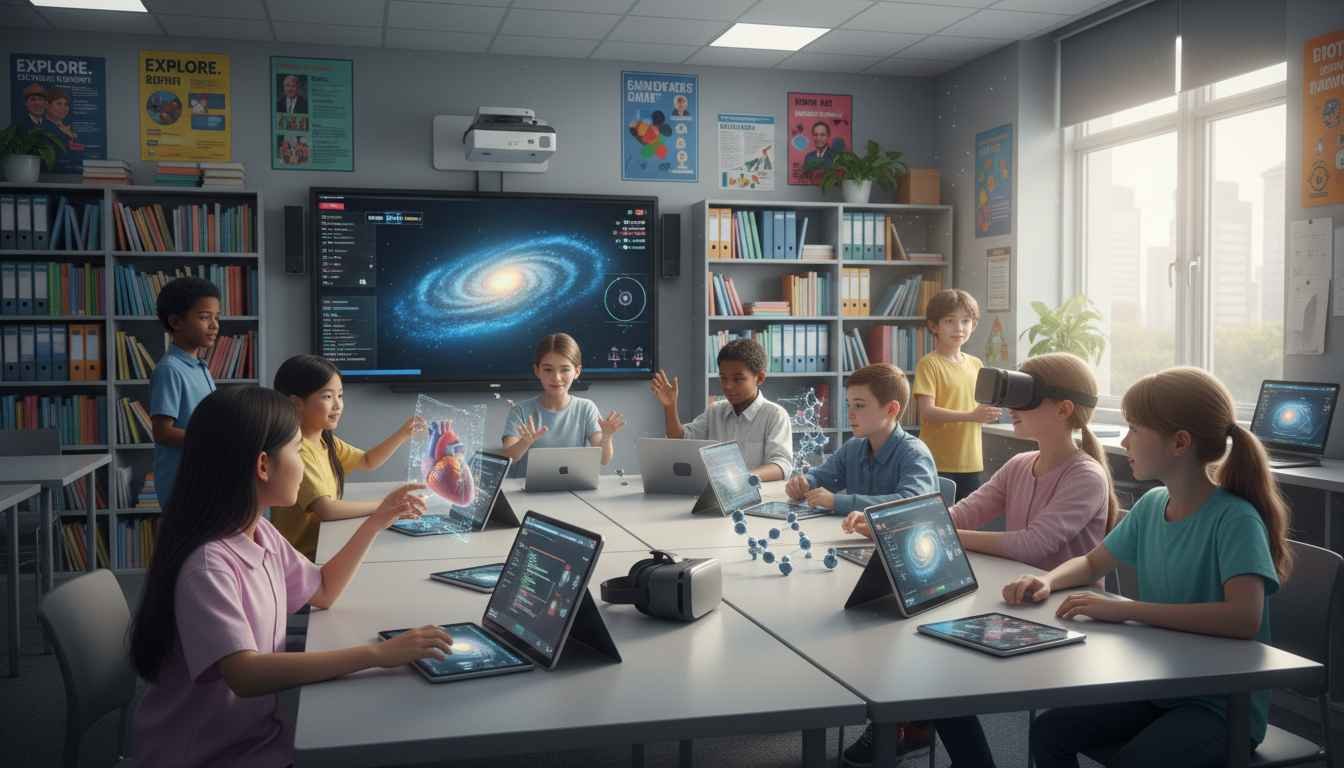
Imagine stepping into a world where complex STEM concepts transform into engaging, interactive experiences. This is the power of simulations – a game-changer for beginners navigating the intricate landscapes of science, technology, engineering, and mathematics. As the digital age accelerates, the urgency to adopt innovative educational tools has never been greater. Simulations offer a dynamic solution, bridging the gap between theoretical knowledge and practical understanding. For those passionate about education, embracing this technology is not just an option; it’s a necessity to stay ahead in the ever-evolving educational landscape.
The Rise of Simulations in STEM Education
In recent years, the integration of simulations into STEM education has seen exponential growth. These digital tools replicate real-world phenomena, allowing students to experiment and explore without the constraints of traditional labs. The allure lies in their ability to make abstract concepts tangible. For instance, platforms like PhET Interactive Simulations offer virtual labs where students can manipulate variables and observe outcomes in real-time. Such immersive experiences are invaluable for beginners who might find conventional teaching methods daunting. The shift towards simulation-based learning is not merely a trend but a reflection of a deeper understanding of how students learn best in the 21st century.
Bridging the Gap: From Theory to Practice
Traditional STEM education often emphasizes theoretical knowledge, leaving students with limited opportunities to apply what they’ve learned. Simulations bridge this gap by providing a safe environment to experiment and make mistakes without real-world consequences. This hands-on approach fosters a deeper understanding of complex concepts. For example, in a virtual chemistry lab, students can mix chemicals and observe reactions, gaining insights that would be challenging through textbook learning alone. Such practical experiences are crucial for beginners, as they build confidence and reinforce theoretical knowledge through application.
Enhancing Engagement Through Interactive Learning
Engagement is a cornerstone of effective learning. Simulations captivate students by transforming passive learning into active exploration. Interactive elements, such as drag-and-drop features and real-time feedback, keep learners immersed and motivated. For instance, in a physics simulation, students can adjust variables like mass and velocity to see how they affect motion, making the learning process both fun and informative. This level of interactivity is particularly beneficial for beginners, as it caters to various learning styles and paces, ensuring that each student can grasp complex concepts at their own speed.
Overcoming Common Challenges in STEM Learning
STEM subjects are often perceived as challenging, leading to disengagement and attrition among students. Simulations address these challenges by providing an accessible entry point into complex topics. They allow students to visualize and manipulate abstract concepts, making them more approachable. For example, understanding the principles of electricity becomes more intuitive when students can virtually build circuits and observe the flow of current. By demystifying difficult concepts, simulations reduce anxiety and encourage a growth mindset, empowering beginners to tackle STEM subjects with confidence.
Real-World Applications: From Classroom to Career
The benefits of simulations extend beyond the classroom. Many industries utilize simulation-based training to prepare professionals for real-world scenarios. For instance, medical students use virtual patients to practice diagnostic skills, while engineers simulate stress tests on materials before construction. By incorporating simulations into STEM education, students gain exposure to tools and methodologies used in their future careers. This practical experience not only enhances learning but also provides a competitive edge in the job market, as students are better prepared for the challenges they will face in their professional lives.
Accessibility and Inclusivity in STEM Education
One of the most compelling advantages of simulations is their ability to make STEM education more accessible and inclusive. Students from diverse backgrounds, including those in remote areas or with limited resources, can access high-quality simulations online. Platforms like STEMulator offer virtual worlds where students can explore STEM concepts interactively, regardless of their physical location. This democratization of education ensures that all students, regardless of their circumstances, have the opportunity to engage with and excel in STEM subjects, fostering a more inclusive and equitable educational environment.
Future Trends: The Evolution of Simulation-Based Learning
The landscape of STEM education is continually evolving, and simulations are at the forefront of this transformation. Emerging technologies such as virtual reality (VR) and augmented reality (AR) are enhancing the immersive experience, allowing students to interact with 3D models and environments. These advancements promise to make learning even more engaging and effective. As these technologies become more accessible, the potential for simulations to revolutionize STEM education grows exponentially. Educators and institutions must stay abreast of these developments to ensure they are providing students with the most effective learning tools available.
Conclusion: Embracing Simulations for a Brighter Educational Future
The integration of simulations into STEM education is not just a passing trend but a fundamental shift in how we approach teaching and learning. For beginners, these tools offer a gateway to understanding complex concepts in a manageable and engaging way. As the demand for STEM professionals continues to rise, equipping students with the skills and knowledge they need through innovative methods like simulations is imperative. For friends of education, the call to action is clear: embrace simulation-based learning to empower the next generation of thinkers, innovators, and problem-solvers.
As we embrace simulation-based learning, it’s equally important to focus on developing students’ media literacy and information skills, ensuring they can critically evaluate and utilize the vast resources available to them. For effective strategies in this area, educators can explore various approaches to enhance students’ understanding and application of media literacy skills through programs and curricula designed for the digital age, which can be found at media literacy strategies.
